
U.S. Enterprises Integrate Analytics, AI at Scale – ISG – February 23, 2026.
The advanced analytics and AI strategies of large U.S. enterprises are maturing from isolated initiatives into integrated programs spanning all core business systems, according to a new research report published today by Information Services Group (ISG), a global AI-centered technology research and advisory firm.
The 2025 ISG Provider Lens Advanced Analytics and AI Services reports for the U.S. find that organizations are responding to the growing complexity of their IT environments by seeking unified data foundations to support predictive analytics and increasingly ambitious AI goals. As the average software portfolios of large enterprises near 2,000 systems, data and application fragmentation has elevated the importance of consistent data integration, governance and lifecycle management. Organizations are partnering with service providers on projects that combine data modernization, analytics and AI.
“U.S. enterprises are no longer experimenting with analytics and AI at the margins,” said Kathy Rudy, partner, ISG Data, Analytics and Technology Office. “They are embedding these capabilities into how decisions are made, processes are automated and performance is measured across the organization.”
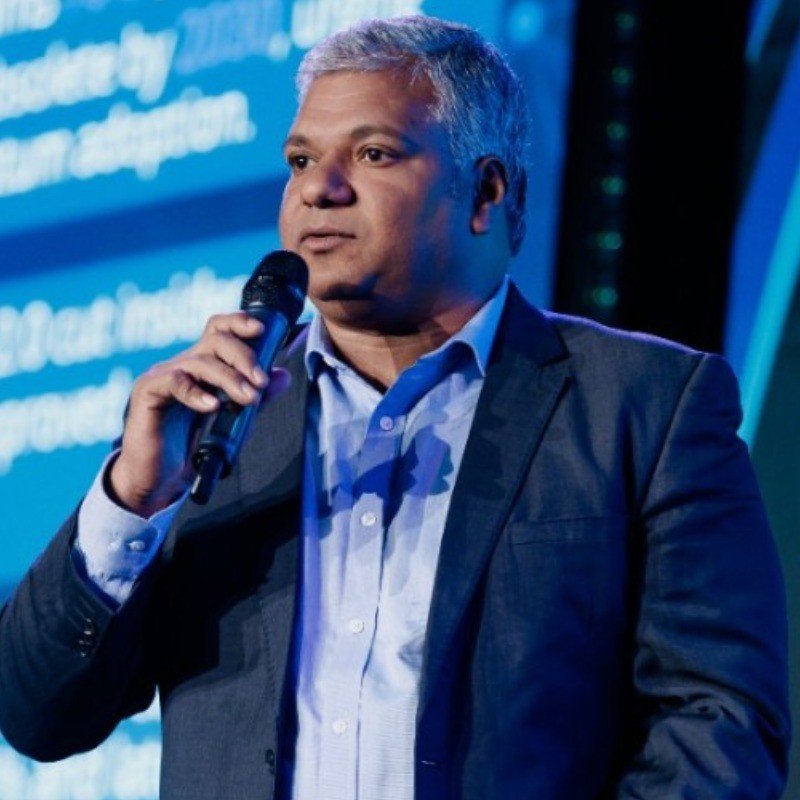
Gowtham Sampath, ISG
AI is increasingly central to digital transformation at U.S. companies, with AI spending as a share of IT budgets almost tripling in the past two years to nearly 6 percent, ISG says. As enterprise AI moves from pilots to production, organizations have been forced to reassess how they use data, analytics and AI across lines of business. Many large enterprises are adopting formalized operating models for advanced analytics and AI (AAAI) initiatives, consolidating leadership, governance and architectural ownership across the organization.
Midsize enterprises often follow a different path, creating hybrid operating models that blend central coordination with autonomy within domains, ISG says. By allowing leaders of different parts of the organization to steward AAAI projects, midsize firms allow domains to advance at their own paces. Midsize service providers are well-equipped to support this approach by offering accelerators, pre-configured data models and migration frameworks that can be adapted to specific business contexts.
Specialist providers have recently emerged as important analytics and AI partners for enterprises in the U.S., ISG says. Customer data, supply chain telemetry, competitive intelligence and clinical datasets are expected to become leading drivers of business value in the coming years, and many specialists are focused on applying advanced analytics and AI to these types of regulated or high-precision data. They continue to deepen their expertise in verticals such as healthcare, financial services, manufacturing and digital commerce.
“Enterprises are under increasing pressure to connect analytics and AI investments to measurable business results,” said Gowtham Sampath, principal analyst, ISG Research, and lead author of the report. “The organizations making progress are those that treat data, analytics and AI as a continuous operational capability rather than a series of projects.”
The reports also explore other trends in analytics and AI services in the U.S., including the importance of change readiness and process reengineering to successful AAAI initiatives and increasing demand for consumption-based and outcome-linked provider pricing.
To learn more, visit: www.isg-one.com