
Latest News & Executive Interviews

CIOs Recast AI Transformation Around Growth, Value and Board Accountability
Enterprise technology leaders are facing mounting pressure to translate artificial intelligence investments into measurable financial and competitive gains as boards move beyond enthusiasm for experimentation and begin demanding evidence that transformation spending is improving performance. The shift is altering how CIOs select projects, organize technology teams and communicate with boards and executive peers.

Implementation Guide: Strengthening Cyber Resilience for AI-Enabled Enterprise Operations
According to Gordon Cowan, founder and CEO of CyBrilliance, cyber resilience is best seen as a continuum encompassing preparedness, visibility, response, recovery and governance. Each component depends on the others. A gap in data visibility can complicate incident response. Compromised credentials can undermine otherwise effective security controls. Inaccessible or corrupted backups can delay recovery. Missing evidence can create regulatory, governance and insurance problems after the technical incident has been resolved.
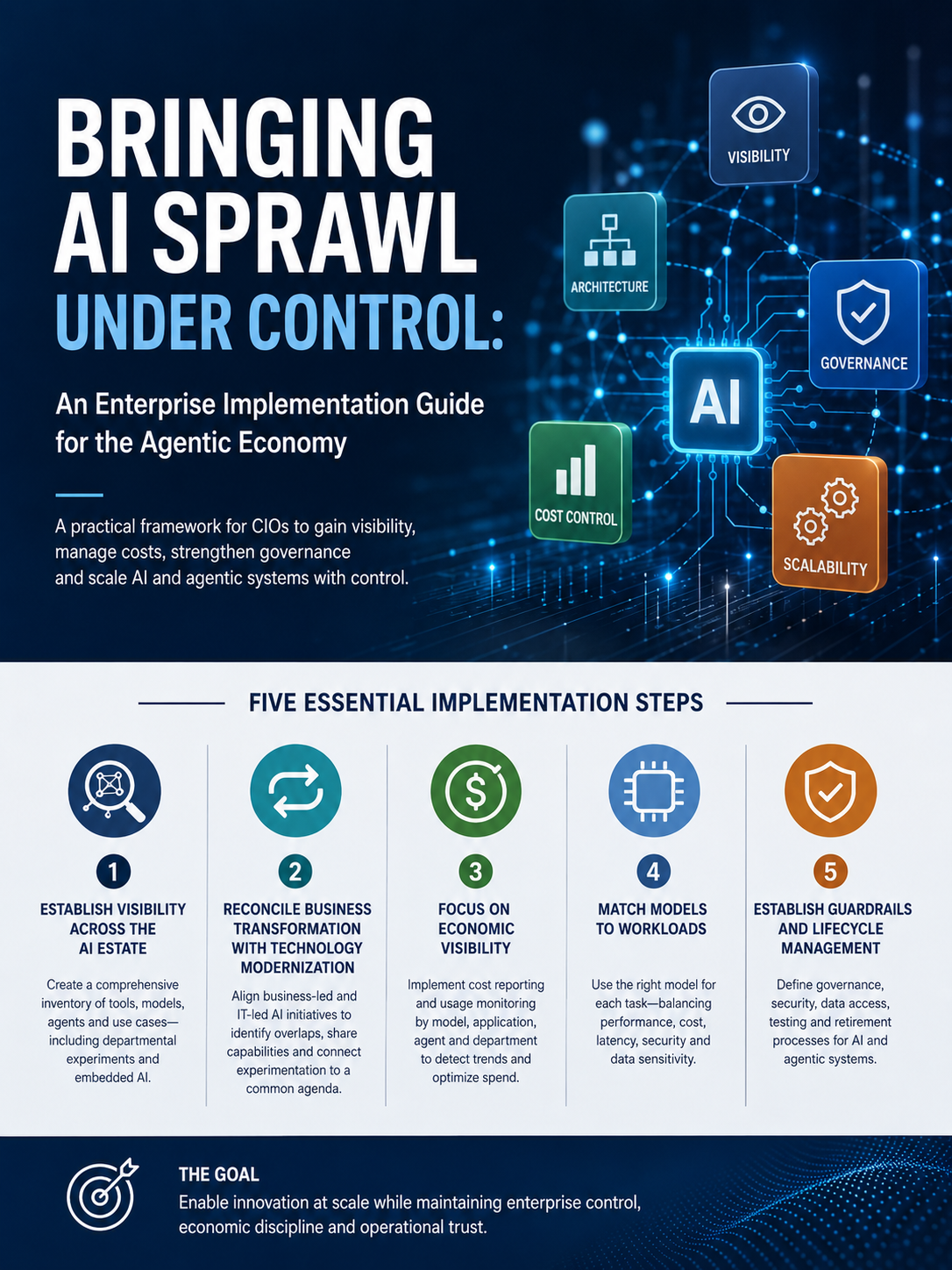
Bringing AI Sprawl Under Control: An Enterprise Implementation Guide for the Agentic Economy — September 3, 2026
The proliferation of generative AI tools, embedded AI capabilities and independently developed agents is creating a new management challenge for enterprise technology leaders. Experiments that begin as relatively isolated investments can become persistent departmental capabilities, while consumption-based pricing, access to enterprise data and autonomous actions create financial and operational dependencies that may be difficult to see from the center of the organization.
Based on insights from a BizTechReports executive interview with Tiago Azevedo, CIO of OutSystems, this implementation guide provides a framework for moving from distributed AI experimentation toward a more deliberate enterprise operating model.
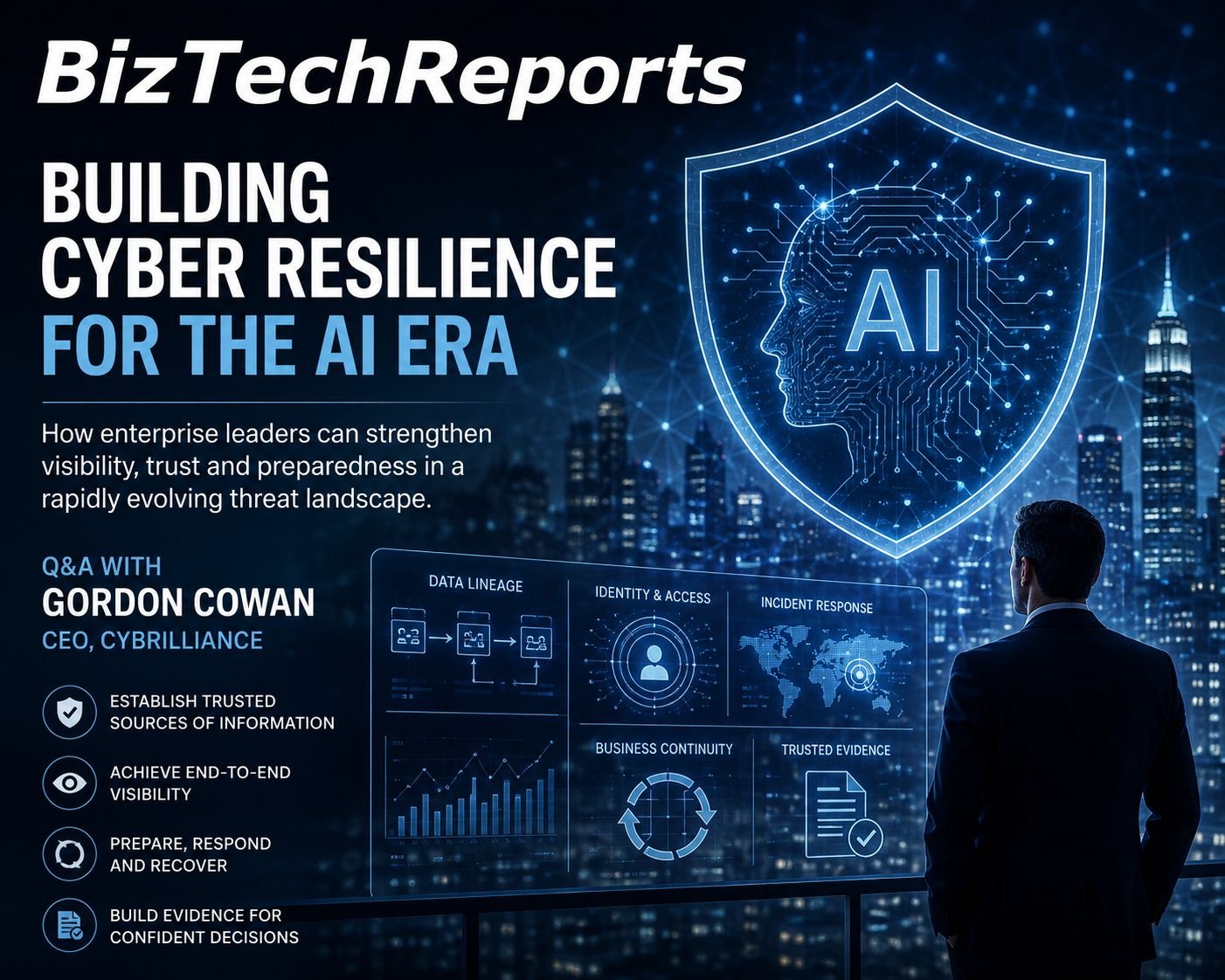
Building Cyber Resilience for the AI Era — CyBrilliance - September 3, 2026
BizTechReports spoke with Gordon Cowan, founder and CEO of CyBrilliance, about how enterprise leaders should reassess cyber resilience as AI adoption accelerates. Drawing on his cybersecurity work and 45 years in the insurance industry, Cowan discussed the strategic, operational, financial and technological implications of preparing enterprises for a threat environment increasingly shaped by automation, compromised identities and rapidly evolving attack methods.
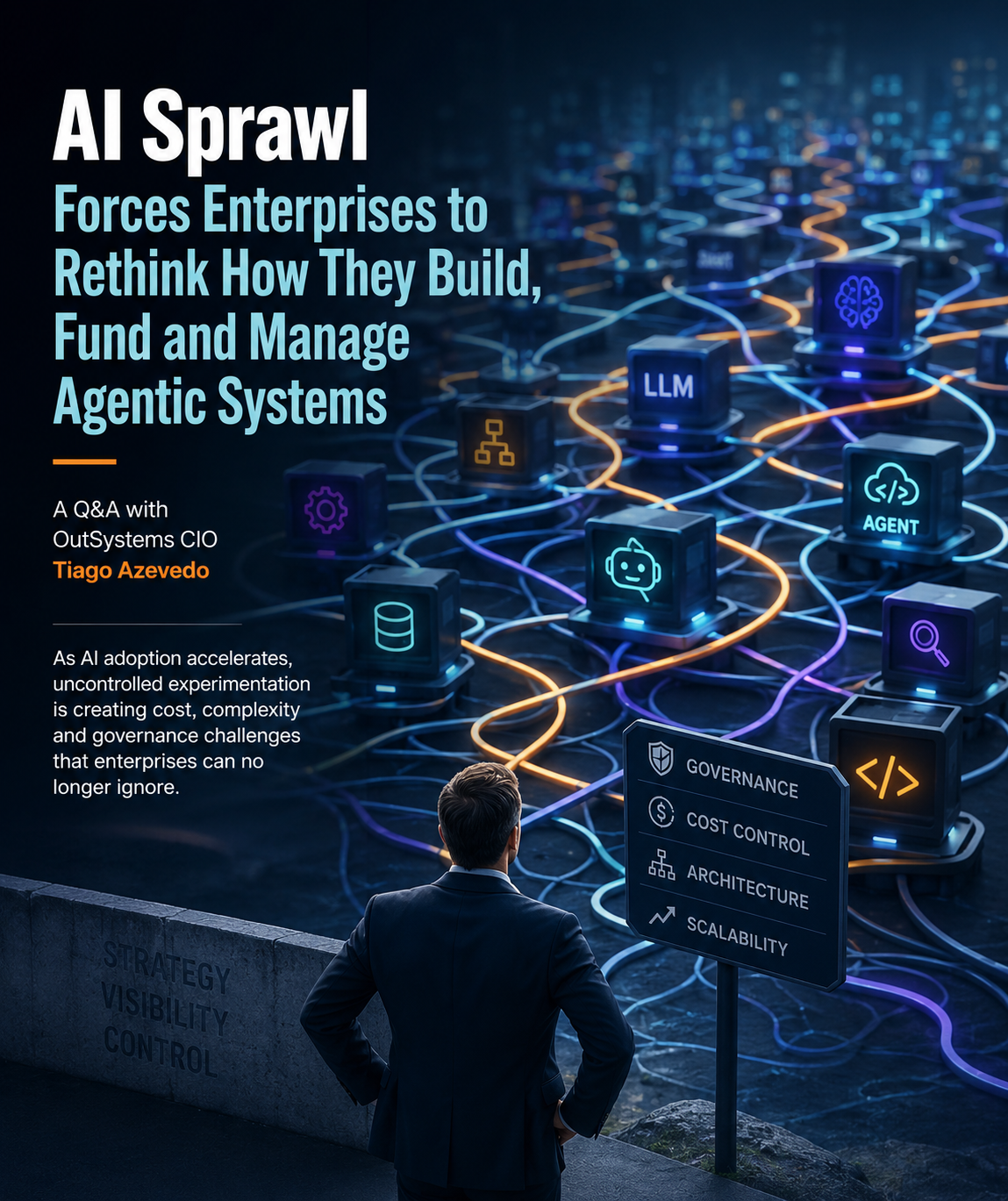
AI Sprawl Forces Enterprises to Rethink How They Build, Fund and Manage Agentic Systems — August 31, 2026
The adoption of generative and agentic AI is creating a familiar enterprise technology problem as organizations experiment with models, build agents and adopt AI-enabled applications faster than traditional technology management processes can evaluate their costs, dependencies, security requirements and potential overlap with other initiatives.
For CIOs, the challenge is increasingly shifting toward creating an environment where AI experimentation can continue without allowing fragmented technologies and unpredictable consumption costs to overwhelm enterprise architectures and budgets. In this BizTechReports executive Q&A, Tiago Azevedo, CIO of OutSystems, discusses why AI sprawl is emerging, how the economics of AI are changing the conversation with CFOs, why traditional approaches to technology governance are insufficient and how enterprise architecture can provide a foundation for scaling agentic systems.

AI Forces Enterprises to Rethink Cyber Resilience Around Data, Recovery and Governance — CyBrilliance - August 27, 2026
Artificial intelligence is expanding the scope of enterprise cyber resilience as organizations increasingly rely on automated systems to access information, make recommendations and influence business decisions. This shift is putting greater pressure on technology leaders to understand where critical data resides, how it moves through the enterprise, and whether systems can be restored to a trusted operational state following an attack.

AI Sprawl Pushes CIOs to Reassert Control Over the Agentic Enterprise — Outsystems - August 26, 2026
The rapid spread of artificial intelligence across the enterprise is creating new technology management challenges as agentic experiments, embedded AI features and independently developed initiatives accumulate faster than organizations can track their costs, architectural dependencies and access to corporate data.
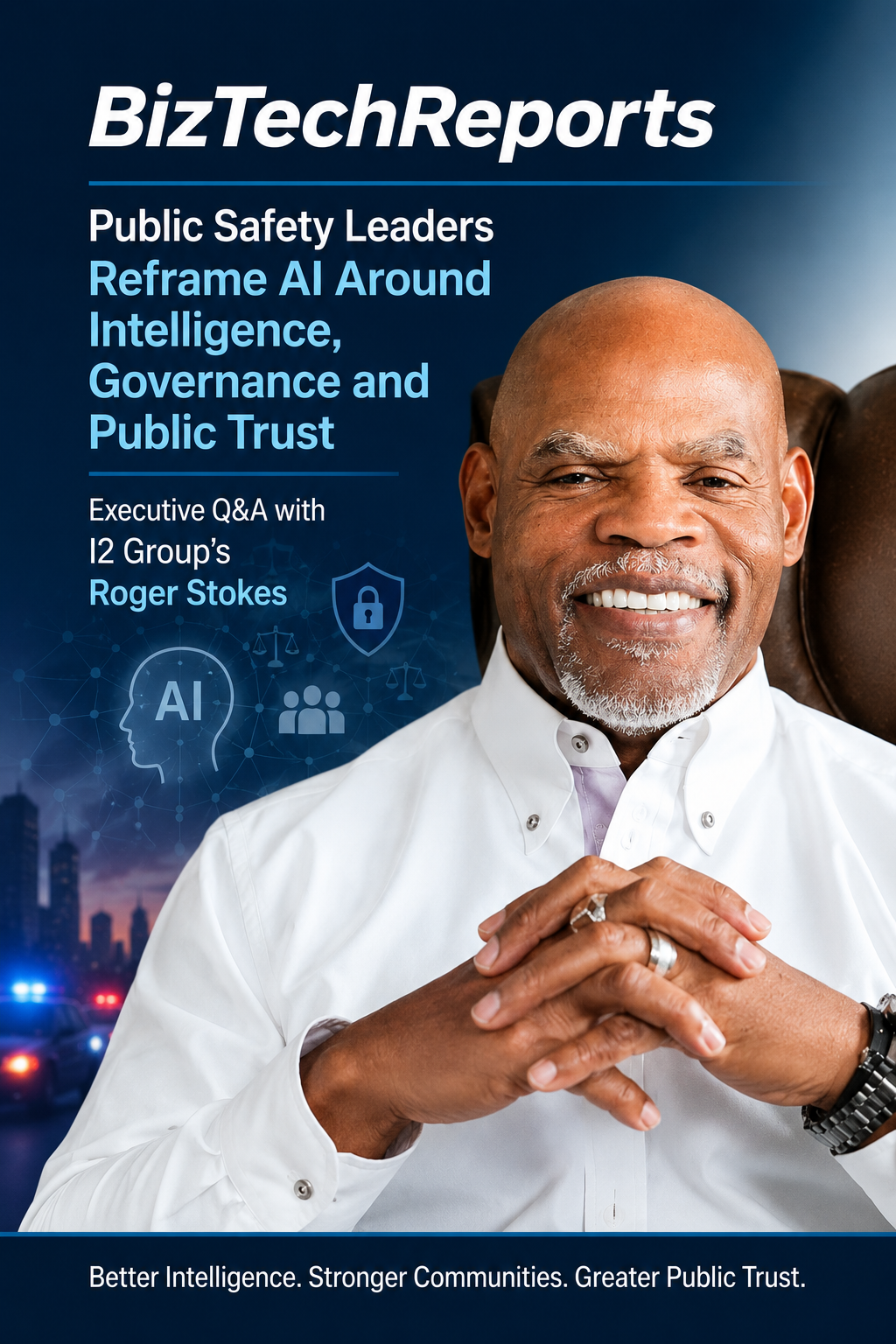
Public Safety Leaders Reframe AI Around Intelligence, Governance and Public Trust
Artificial intelligence is reshaping public safety intelligence operations, but perhaps not in the way many anticipated. Rather than pursuing fully autonomous investigative systems, state and local agencies are increasingly focused on using AI to help intelligence professionals process larger volumes of information, strengthen collaboration across jurisdictions and accelerate operational decision-making while preserving transparency, accountability and public trust.

Public Safety Agencies Rework Intelligence Operations as AI Shifts Focus From Data Collection to Human Judgment — i2 Group - August, 13 2026
State and local public safety agencies are entering a new phase of artificial intelligence adoption in which success depends less on automating investigations than on helping intelligence professionals process growing volumes of information while preserving governance, transparency and public trust. That evolution is reshaping how agencies think about intelligence sharing, analyst training and investment priorities across law enforcement, corrections, probation and other public-sector organizations.

IT Service Providers Rebuild Workforce Strategies as AI Accelerates Shift to Skills-Based Talent Models — SoloWorkforce - August, 12, 2026
As AI automates routine engineering and administrative work, organizations are increasingly replacing – or supplementing – large permanent technical staff with leaner core teams supported by specialized consultants engaged for specific projects. “The shift reflects broader changes in both technology and labor markets,” said Sara Wilkison, CEO of Solo Workforce, in an executive vidcast interview with BizTechReports.

CIO 100 Leadership Live New York Recap: Technology Executives Push Past AI Pilots, Search for Measurable Returns
Technology executives from across the New York metropolitan area gathered July 16 at Convene, One Liberty Plaza, for CIO 100 Leadership Live New York, a full day of roundtables and panel discussions on enterprise AI investment, governance and organizational change.

Quantum Appliances Move Enterprise Computing Beyond the Classical Limits – QCi – June 30, 2026
For years, enterprise conversations around quantum computing have revolved around a look to a distant horizon. The prevailing assumption held that organizations would need to wait for massive, highly specialized systems operating under extreme environmental conditions before quantum computing would be in a position to deliver practical business value. Quantum Computing Inc. CEO and co-founder Yuping Huang believes that this is a false assumption.
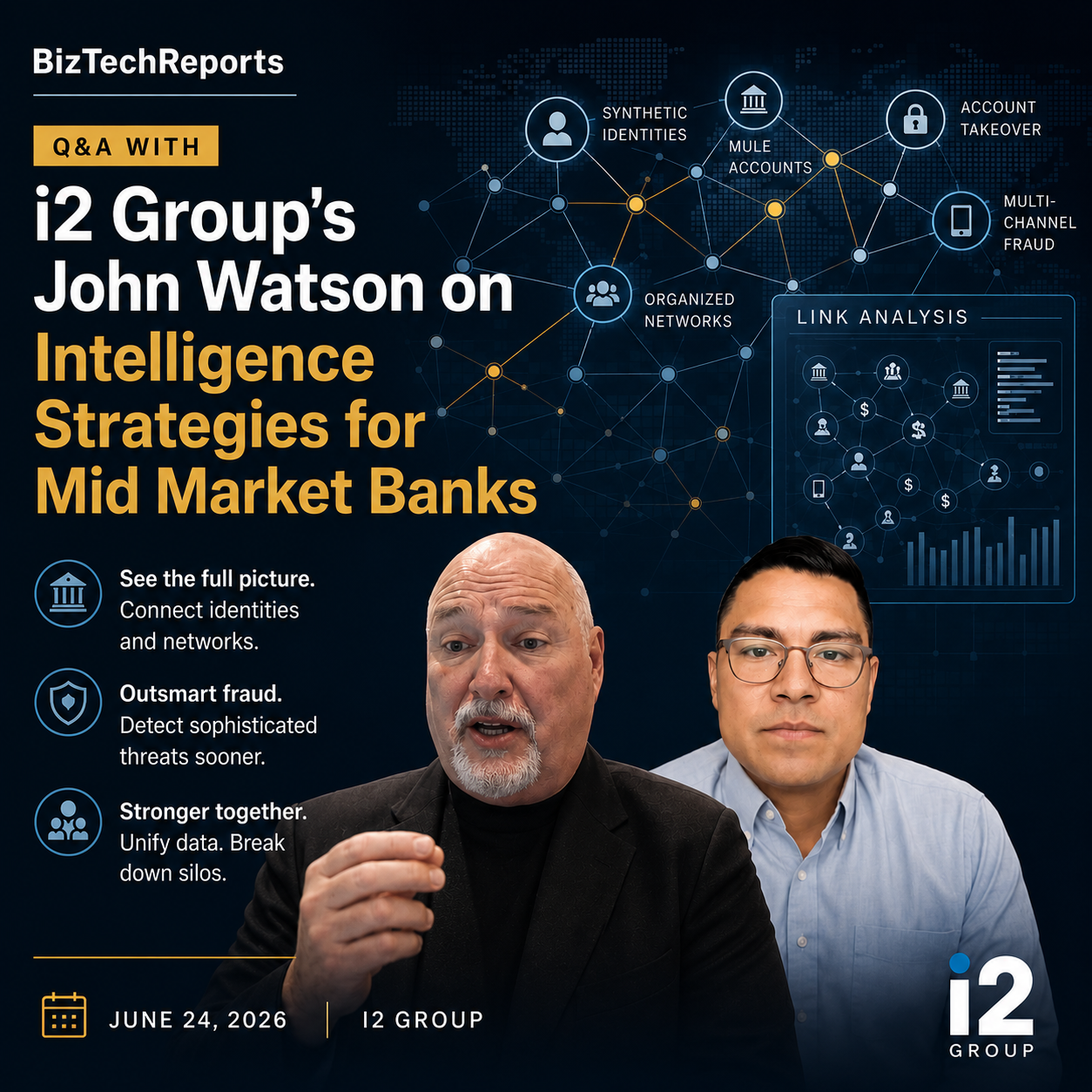
Why Mid-Market Banks Are Adopting Intelligence Tradecraft to Combat Modern Financial Crime – i2 Group – June 26, 2026
In a recent BizTechReports executive vidcast interview, John Watson of i2 Group discussed how investigative methodologies traditionally associated with intelligence agencies and law enforcement organizations are finding a growing role in commercial banking environments. He explained why many mid-market financial institutions are rethinking how they approach fraud, anti-money laundering, identity verification, and risk management in response to these sophisticated threats.

Quantum Computing Shifts Toward Practical Enterprise Deployment Through Hybrid CPU-GPU-QPU Architectures – QCi – June 26, 2026
In a recent BizTechReports executive vidcast interview, Quantum Computing Inc. President, CEO, and Co-Founder Yuping Huang described a near-term future in which quantum systems augment rather than replace conventional enterprise infrastructure. The company is developing compact photonics-based quantum appliances that are designed to coexist with current CPU and GPU investments to address highly specialized workloads tied to optimization, AI acceleration, cybersecurity, and dynamic decision-making.

Mid-Market Banks Adopt Intelligence Tradecraft as Fraud Networks Grow More Sophisticated – i2 Group – June 24, 2026
Mid-market banks are confronting the same organized fraud networks that once primarily targeted the largest financial institutions. According to Javelin Strategy & Research's 2026 Identity Fraud Study, identity fraud generated approximately $27.3 billion in losses during 2025 and affected 18 million victims. New-account fraud victims increased 31% year over year, while account takeover victims increased 18%, reflecting the growing sophistication and reach of modern fraud operations.
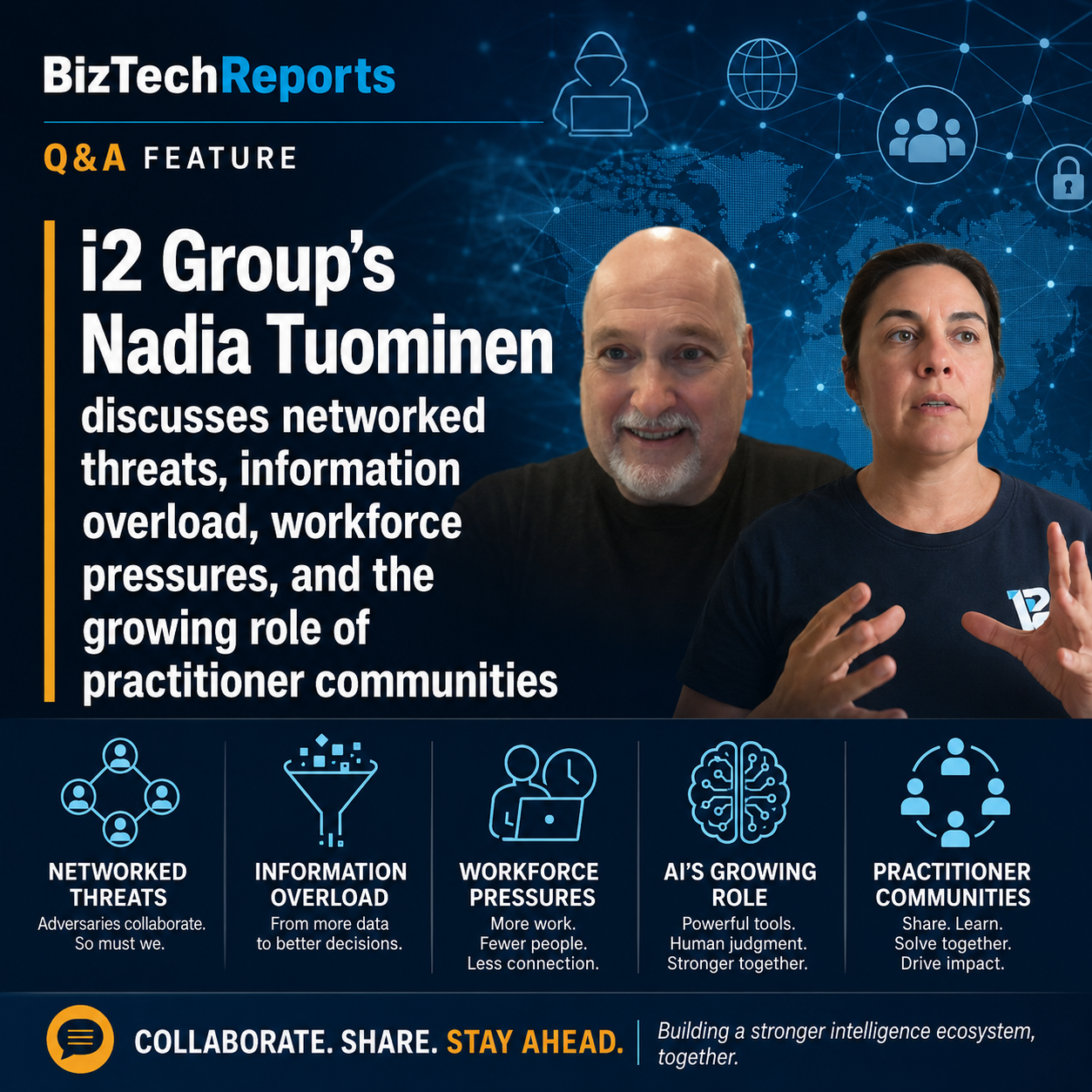
Q&A: Why Intelligence Organizations Need More Cross-Disciplinary Collaboration — i2 Group - June 17, 2026
Analysts and investigators are expected to process growing volumes of information, adopt new technologies, and respond to increasingly complex threats, often while operating with limited resources and smaller teams. During a recent BizTechReports executive vidcast, Nadia Tuominen, Community Champion at i2 Group, discussed why intelligence organizations are placing greater emphasis on collaboration, knowledge sharing, and practitioner communities as a way to address these challenges.

Growing Threat Complexity Drives Demand for Cross-Disciplinary Intelligence Collaboration — i2 Group - June 15, 2026
Intelligence organizations are expanding collaboration across agencies, sectors, and professional disciplines as increasingly sophisticated threats expose the limits of traditional approaches to intelligence analysis, training, and information sharing.
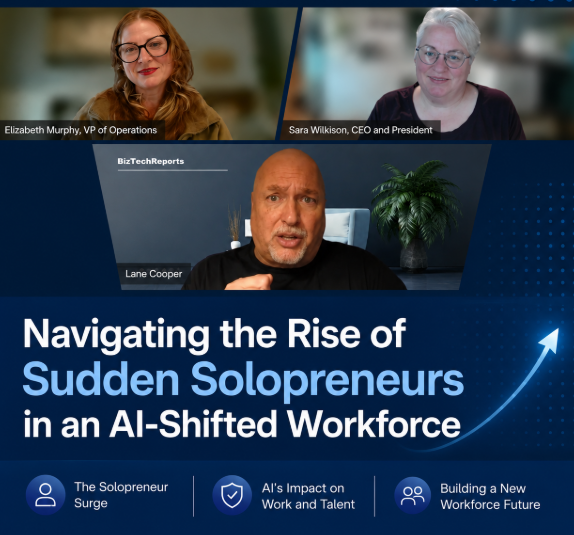
Navigating the Rise of Sudden Solopreneurs in an AI-Shifted Workforce – Solo Workforce – June 10, 2026
The American workforce is undergoing one of the most significant structural shifts in a generation as the traditional employment social contract itself transforms. Layoffs and restructuring driven by artificial intelligence, automation and cost pressures are pushing workers out of full-time roles faster than many can reenter them.

Revenue Cycle's AI Moment: A Conversation with Jacob Shurbet, Principal, PwC US – PwC – June 5, 2026
Healthcare organizations are under mounting financial pressure, and the revenue cycle sits at the center of it. Billing complexity, payer friction, labor shortages, and fragmented data systems are converging to suppress realized revenue at scale. Jacob Shurbet, a principal at PwC, has spent years working with health systems on the operational and strategic dimensions of that challenge.

Rethinking Cyber Insurance: Policy Design and Structure Shape Protection for Mid-Market Healthcare Providers – DeshCap – June 4, 2026
Cyber insurance is becoming a standard component of risk management across the healthcare sector, particularly among mid-market providers facing increased exposure to ransomware, data breaches, and operational disruption. Yet as adoption grows, the effectiveness of that coverage is increasingly tied not to whether policies are purchased, but to how they are designed, structured, and aligned with operational risk.