
CIO 100 Leadership Live Atlanta: Enterprises Revisit Knowledge Management as AI Raises the Stakes for Data, Automation, and Decision Making – Unisys - March 11, 2026
As companies accelerate investments in artificial intelligence, enterprise technology leaders are placing renewed attention on knowledge management. Executives say the way organizations capture, structure, and apply operational knowledge will play a decisive role in determining how effectively AI systems function inside the enterprise.
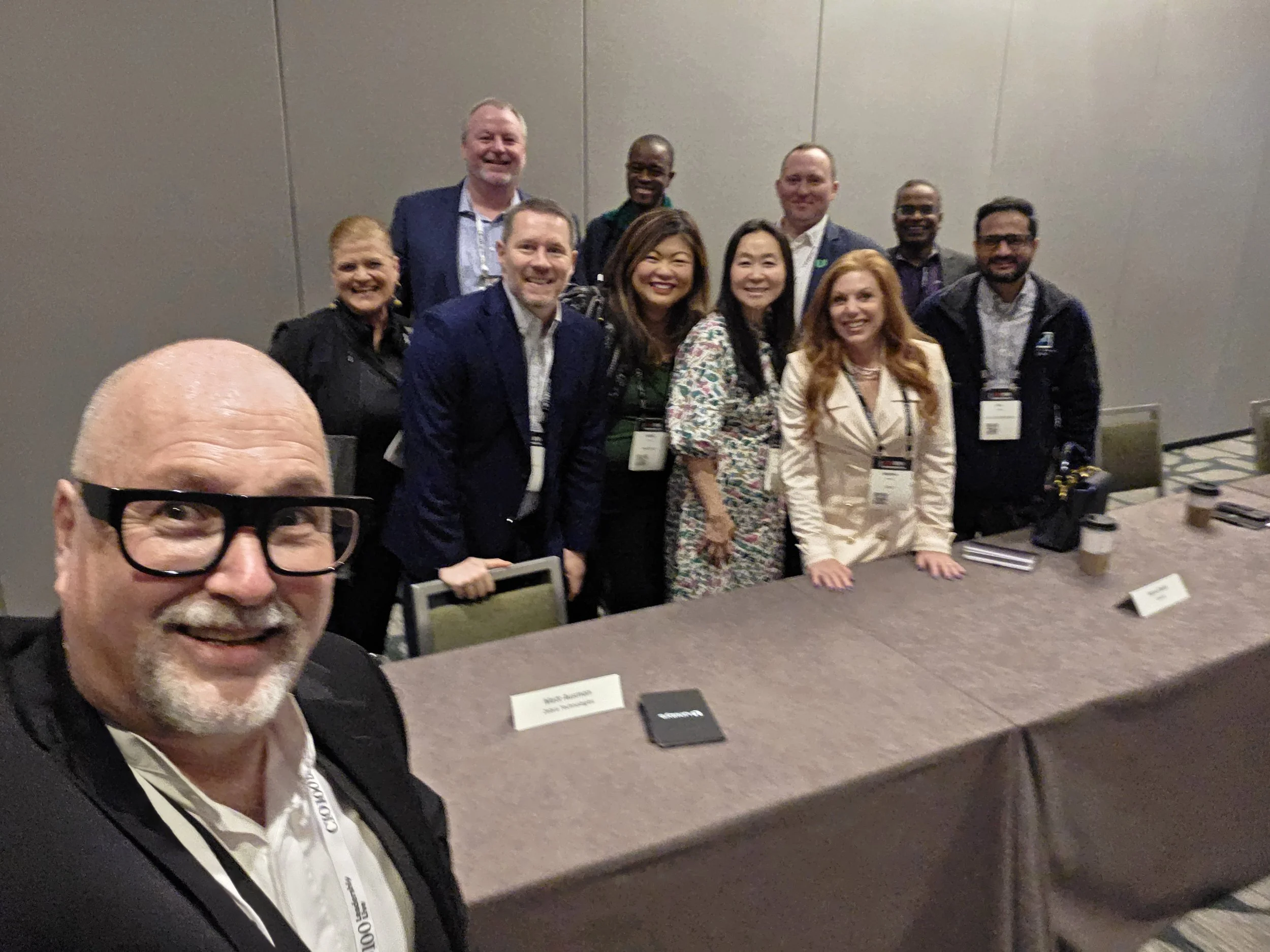
CIO 100 Leadership Live in Atlanta held on March 5, 2026.
This was one of the key themes to emerge during a roundtable discussion among technology executives at CIO 100 Leadership Live in Atlanta held on March 5, 2026. The conversation explored how organizations are rethinking operational knowledge as AI systems begin to influence decision making, service operations, and workflow automation.
“Knowledge management becomes the enabler for so much more of the business,” said Joel Raper, chief commercial officer at Unisys. “You have to put the guidebook in place. If you want AI to act on something, it has to understand how the organization actually works.”
For many years, knowledge management systems in large enterprises consisted primarily of documentation libraries and support articles. Those systems often grew fragmented as organizations expanded and technologies evolved. Employees frequently bypassed them because the information was outdated or difficult to navigate.
Perils of Manual Knowledge Management
Raper said traditional approaches fail because they depend heavily on manual documentation that rarely reflects the full reality of day to day work.
“Unless someone writes it down, the knowledge never gets captured,” he said. “But when people document their work, you often get maybe twenty percent of what they actually do. The rest stays in their heads.”
As organizations deploy AI across service management, software development, and operational environments, that gap becomes increasingly visible. AI systems require structured knowledge about processes, decisions, and outcomes in order to automate tasks or generate reliable recommendations.
That requirement is pushing many enterprises to treat knowledge management as an operational system rather than a static repository.
Technology leaders participating in the discussion described how AI initiatives often reveal weaknesses in enterprise knowledge structures that accumulated over many years.
Some organizations begin AI projects by attempting to perfect their data before launching initiatives. Raper said that approach often slows progress.
“The idea that you need perfect data before you can start is a trap,” he said. “The better approach is to start capturing operational knowledge in a structured way so the systems can learn from real interactions.”
In large IT environments, many technical issues are solved repeatedly without the underlying knowledge being systematically captured or reused.
Raper described a common scenario in which the same problem appears across support desks even though engineers already know how to resolve it.
“If you see a problem once and you know the fix, there is no reason you should have to solve it again the same way,” he said. “That is where knowledge management should come into play.”
Organizations historically created knowledge articles only after large system failures or widespread incidents. Smaller problems that occur frequently often remain undocumented even though they create recurring operational costs.
Raper said that AI tools can analyze operational signals such as service conversations, support tickets, and system telemetry to identify patterns and generate knowledge articles automatically.
“You can start to build knowledge from real time interactions,” he said. “Instead of waiting for someone to write documentation, the system can observe how problems are actually solved.”
Executives participating in the discussion described similar experiments inside their organizations. Some are analyzing help desk tickets to identify repeated issues that could be resolved automatically. Others are examining operational data to detect patterns that might signal emerging problems.
Those approaches shift knowledge management from reactive documentation to proactive operational insight.
Evolving Economics of Knowledge Management and AI
The conversation also highlighted the economic pressures shaping enterprise AI adoption.
While AI often attracts attention for its role in digital innovation, many CIOs remain focused on operational efficiency and productivity gains.
Organizations are examining areas such as service operations and technical support where knowledge systems can reduce repetitive work and enable automation.
Raper said measurable efficiency improvements are possible when knowledge management systems are integrated with service management platforms.
“Thirty to forty percent efficiency improvement is very achievable in some environments,” he said. “But it requires structured knowledge and the ability to connect that knowledge to automation.”
Automation introduces governance challenges for enterprises that operate in regulated industries or manage sensitive data.
Technology leaders said organizations must control how AI systems access corporate information and how automated actions are executed.
Those requirements are influencing enterprise architecture strategies.
Many organizations are building internal AI layers that process enterprise knowledge before interacting with external models. Those systems help organizations maintain control over sensitive operational data.
“You have to understand the context of the organization,” Raper said. “You cannot just send everything out to a large language model and expect the answers to be correct.”
Raper said enterprises are increasingly building orchestration layers that manage data access, user roles, and governance rules before requests reach external AI services.
Those systems help reduce inaccurate responses while preserving organizational control over internal knowledge.
Executives also emphasized the human factors that shape AI adoption.
Employees sometimes resist AI tools when they believe the technology threatens their roles. Adoption improves when teams understand how the tools can increase productivity and support decision making.
Experiment and Share
Raper said organizations should encourage employees to experiment with AI tools and share practical examples of how they improve daily work.
“If people do not spend time learning how to use these tools, they are going to fall behind very quickly,” he said.
Early adopters inside organizations often demonstrate the value of the technology by showing how it saves time in routine tasks.
“If someone in finance can show how it saves twenty minutes a day on a specific task, suddenly everyone starts paying attention,” Raper said.
Raper believes the next stage of enterprise AI will involve systems that move beyond providing information and begin executing tasks automatically.
Those systems are often described as agentic AI. They can answer questions and perform actions such as resetting passwords, updating configurations, or resolving technical issues.
Knowledge management provides the foundation for those capabilities because automation requires clear and validated instructions.
“If you know that a certain solution resolves the problem ninety five percent of the time, you can start to automate it with confidence,” Raper said.
As enterprises integrate AI into daily operations, executives say the structure and quality of enterprise knowledge will become increasingly important.
“AI can only be as effective as the knowledge it can access,” Raper said. “If the knowledge is fragmented or inconsistent, the outcomes will be as well.”
###