
Latest News & Executive Interviews

Swiss Enterprises Build AI-Ready Cloud Infrastructure – ISG – September 3, 2026.
The 2026 ISG Provider Lens® Private/Hybrid Cloud — Data Center Services report for Switzerland finds that enterprises are rethinking cloud strategies to meet evolving business, regulatory and AI requirements. As organizations scale AI deployments, they seek providers that can modernize core platforms while ensuring secure, compliant operations.
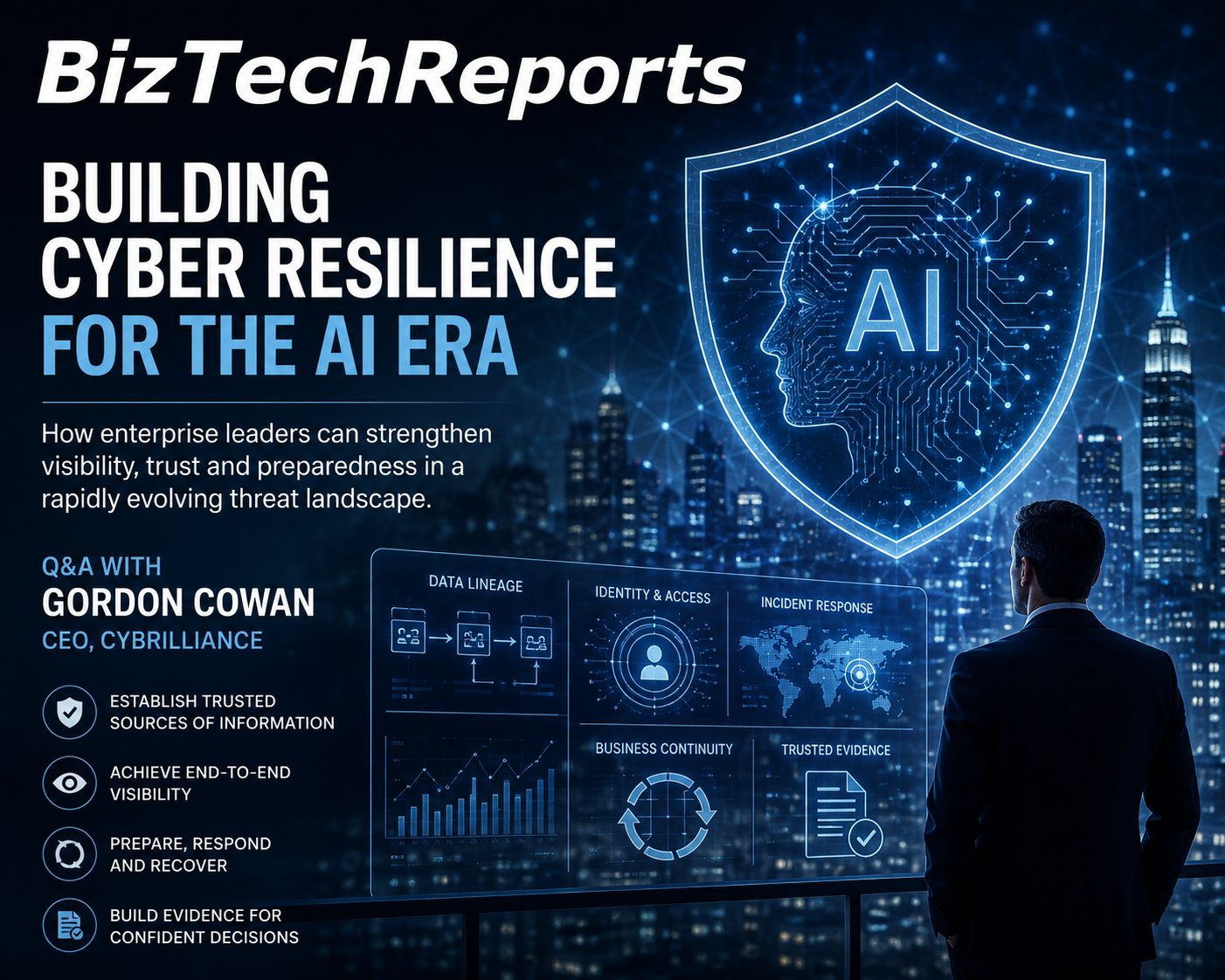
Building Cyber Resilience for the AI Era — CyBrilliance - September 3, 2026
BizTechReports spoke with Gordon Cowan, founder and CEO of CyBrilliance, about how enterprise leaders should reassess cyber resilience as AI adoption accelerates. Drawing on his cybersecurity work and 45 years in the insurance industry, Cowan discussed the strategic, operational, financial and technological implications of preparing enterprises for a threat environment increasingly shaped by automation, compromised identities and rapidly evolving attack methods.

Nearly Nine in Ten CEOs See Some Cost or Revenue Benefits from AI in Targeted Areas, But Most Are Struggling to Scale It – BCG – September 1, 2026.
Nearly nine in ten CEOs say their companies are now seeing cost or revenue benefits from AI in targeted areas. Yet despite these early gains, most organizations are struggling to scale AI’s financial impact. The core problem is not technology. It is execution.

Gartner Identifies the Companies to Beat in the AI Semiconductor Vendor Race – Gartner – August 31, 2026.
In the Company to Beat insights from Gartner, analysts have identified market-defining AI leaders across more than 40 categories to pinpoint the companies to beat. These companies are setting today’s benchmark for excellence.
In the fast moving and evolving AI vendor race, the Company to Beat is determined by a methodology based on, but not limited to, six key criteria that differentiate top vendors in the space: technical capabilities, customer implementations, potential customer base, business model, key partnerships, and the broader surrounding ecosystem.
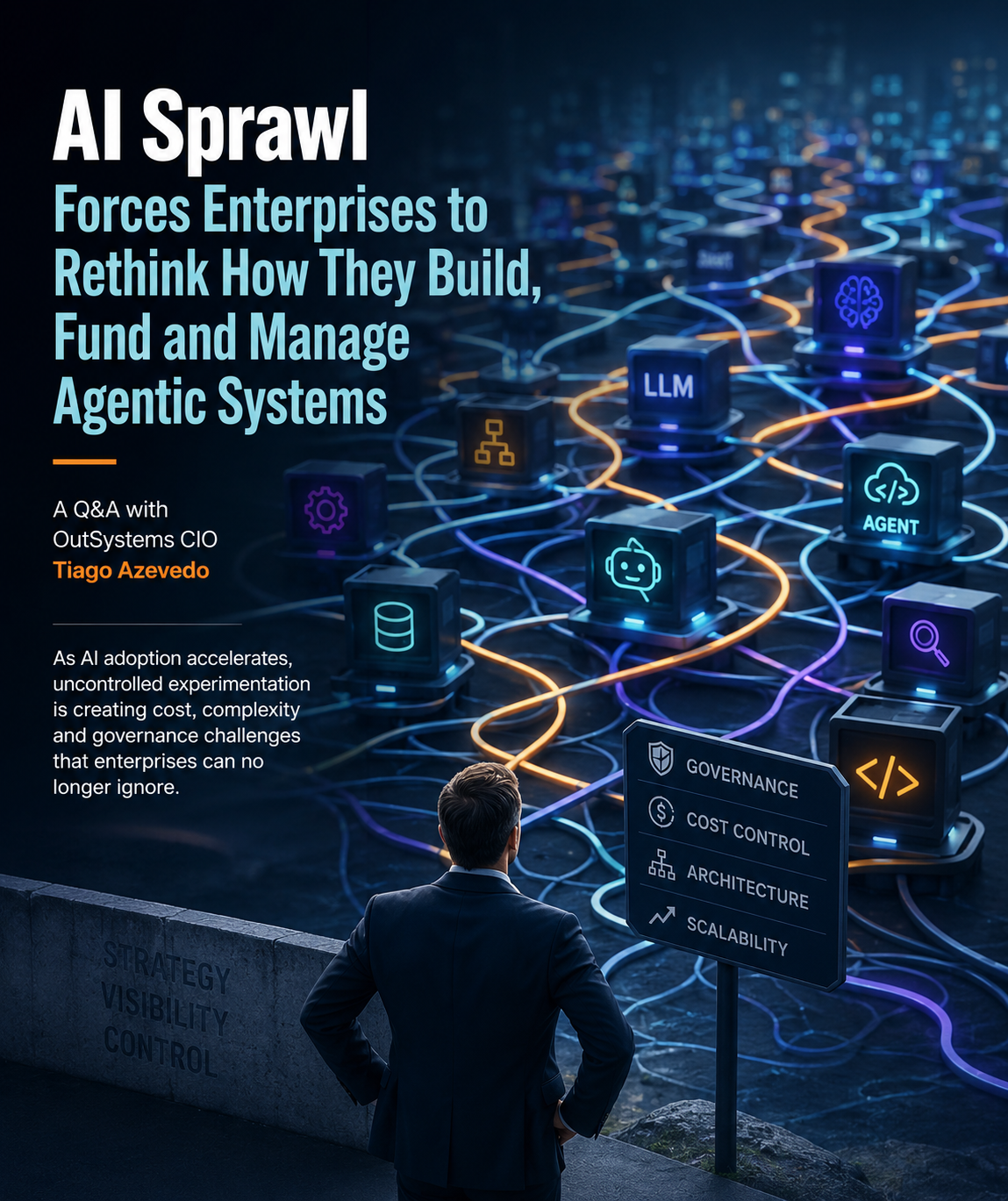
AI Sprawl Forces Enterprises to Rethink How They Build, Fund and Manage Agentic Systems — August 31, 2026
The adoption of generative and agentic AI is creating a familiar enterprise technology problem as organizations experiment with models, build agents and adopt AI-enabled applications faster than traditional technology management processes can evaluate their costs, dependencies, security requirements and potential overlap with other initiatives.
For CIOs, the challenge is increasingly shifting toward creating an environment where AI experimentation can continue without allowing fragmented technologies and unpredictable consumption costs to overwhelm enterprise architectures and budgets. In this BizTechReports executive Q&A, Tiago Azevedo, CIO of OutSystems, discusses why AI sprawl is emerging, how the economics of AI are changing the conversation with CFOs, why traditional approaches to technology governance are insufficient and how enterprise architecture can provide a foundation for scaling agentic systems.
From 2 million to 5 million: Intelligent agents move from concept to large-scale deployment, and the "six-layer full-stack architecture" of enterprise-level AI platforms – IDC – August 28, 2026.
In 2026, China's AI Agent market is undergoing a crucial leap from proof-of-concept to large-scale deployment. IDC data shows that the number of active enterprise AI agents will jump from nearly 2 million in 2025 to an estimated 5 million in 2026 , demonstrating strong growth momentum. At the same time, IDC research indicates that enterprises are no longer satisfied with building isolated AI applications, but are instead shifting towards building unified enterprise-grade AI platforms.

AI Forces Enterprises to Rethink Cyber Resilience Around Data, Recovery and Governance — CyBrilliance - August 27, 2026
Artificial intelligence is expanding the scope of enterprise cyber resilience as organizations increasingly rely on automated systems to access information, make recommendations and influence business decisions. This shift is putting greater pressure on technology leaders to understand where critical data resides, how it moves through the enterprise, and whether systems can be restored to a trusted operational state following an attack.

AI demand drives 94.1% surge in semiconductor forecast for 2026 – Omdia – August 27, 2026.
Omdia has raised its 2026 semiconductor revenue forecast to 94.1% year-over-year (YoY), driven by exceptional growth in DRAM and NAND as AI demand continues to outpace global supply. Memory ICs are now expected to account for more than 50% of total semiconductor revenue in 2026. AI demand has exceeded the industry’s current ability to produce and package chips, with bottlenecks across high bandwidth memory (HBM), advanced packaging, and node capacity expected to persist until at least 2027.
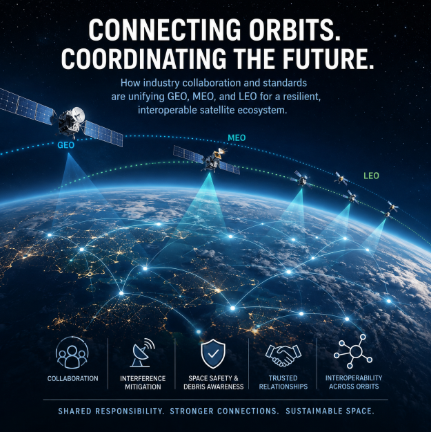
Multi-Orbit Satellite Architectures Force the Industry Toward Shared Operational Governance — August 26, 2026
As satellite operators integrate geostationary orbit (GEO), medium Earth orbit (MEO), and low Earth orbit (LEO) systems into unified connectivity environments, the economics and governance requirements of the sector are being reshaped at nearly every level. Operators, regulators, manufacturers, and antenna providers are being forced to coordinate far more closely as multi-orbit architectures increase pressure for improved spectrum management, interoperability, standardized testing methodologies, debris mitigation policies, and cross-border operational governance.

Gartner Predicts 60% of Organizations Will Adopt Smaller Software Engineering Teams by 2029 – Gartner – August 26, 2026.
By 2029, 60% of organizations will adopt smaller software engineering teams at scale, up from 15% in 2026, according to Gartner, Inc., a business and technology insights company.

AI Sprawl Pushes CIOs to Reassert Control Over the Agentic Enterprise — Outsystems - August 26, 2026
The rapid spread of artificial intelligence across the enterprise is creating new technology management challenges as agentic experiments, embedded AI features and independently developed initiatives accumulate faster than organizations can track their costs, architectural dependencies and access to corporate data.

Supply pressures weigh on global tablet market as shipments decline 10% in Q2 2026 – Omdia – August 25, 2026.
The global tablet market entered an expected period of decline in Q2 2026, with shipments falling 10% year on year to 36 million units, according to the latest research from Omdia. For the first time in years, tablet shipments also defied the typical seasonal pattern of sequentially higher Q2 shipments driven by back-to-school demand.

Gartner Survey Finds Customers Are 3x More Likely to Use Third-Party GenAI Than Company-Provided Chatbots for Customer Service – Gartner – August 24, 2026.
A Gartner survey of 3,566 B2B and B2C customers, conducted in February and March 2026, identified three key shifts in customer behavior: customers are far more likely to use third-party GenAI tools than company-provided chatbots; customers are using GenAI to complete tasks and take action, not only to get answers; and customers expect the option to reach a human agent when companies use AI in customer service.

U.S. Firms Shift Cybersecurity Focus to Enterprise Risk – ISG – August 21, 2026.
The 2026 ISG Provider Lens Cybersecurity — Services and Solutions report for the U.S. finds that cybersecurity is increasingly evaluated as a business-critical capability tied to resilience, financial exposure and executive accountability rather than a standalone IT function. Enterprises are adapting to expanding hybrid and multicloud environments, integration of operational technology and rising use of generative and agentic AI by replacing fragmented security approaches with integrated architectures that provide greater visibility, adaptive protection and coordinated risk management.

Citizens Around the World Are Ready for AI-Powered Public Services. Now Governments Need to Deliver – BCG – August 20, 2026.
Citizens are increasingly ready for governments to embrace artificial intelligence. Nearly two-thirds (64%) of citizens now use AI at least weekly. At the same time, satisfaction with government digital services has fallen by 13 percentage points over the past decade, creating an opportunity for governments to use AI to improve how citizens interact with public services.
These are among the findings of the latest publication from Boston Consulting Group (BCG), Citizens Are Open to Public AI Services. Governments Must Seize the Opportunity, released today. This eighth biennial Digital Government Citizen Survey Report is based on BCG’s largest survey to date, capturing the views of citizens across 44 countries that represent 88% of OECD countries and approximately 70% of the world's population.

Gartner Predicts 20% of Finance Organizations Will Pivot All Talent-related Investments to Advanced Digital Capabilities by 2028 – Gartner – August 19, 2026.
The promise of AI in the finance function, and challenges in obtaining the required digital talent, are driving leading CFOs to concentrate hiring efforts and development resources on employees with the necessary aptitude and attitude to meet the function’s digital skills targets. Gartner predicts that by 2028, 20% of finance organizations will stop hiring and developing nondigitally literate talent and allocate all talent-related investments toward advanced digital capabilities.

Snowflake Expands Role in Enterprise AI Readiness – ISG – August 18, 2026.
The 2026 ISG Provider Lens global Snowflake Ecosystem Partners report finds that Snowflake is evolving from a cloud-native data warehouse into an enterprise environment for AI operationalization. Enterprises increasingly view it as a tool to support trusted data use across distributed environments while addressing architectural complexity, interoperability requirements and the need for AI-ready data foundations. As organizations pursue measurable outcomes from data investments, Snowflake is becoming a key part of broader modernization strategies focused on operational effectiveness and business value.

Public Safety Leaders Reframe AI Around Intelligence, Governance and Public Trust — i2 Group - August 17, 2026
Artificial intelligence is reshaping public safety intelligence operations, but perhaps not in the way many anticipated. Rather than pursuing fully autonomous investigative systems, state and local agencies are increasingly focused on using AI to help intelligence professionals process larger volumes of information, strengthen collaboration across jurisdictions and accelerate operational decision-making while preserving transparency, accountability and public trust.

Gartner Says $234 Billion in Enterprise Application Software Spend Is at Risk from Agentic AI – Gartner – August 14, 2026.
Agentic AI is set to disrupt enterprise software revenue models, with up to $234 billion of enterprise application spending exposed to agentic arbitrage between now and 2030, according to Gartner, Inc, a business and technology insights company. By 2030, this will account for roughly 20% of enterprise application software-as-a-service (SaaS) spending.

Public Safety Agencies Rework Intelligence Operations as AI Shifts Focus From Data Collection to Human Judgment — i2 Group - August, 13 2026
State and local public safety agencies are entering a new phase of artificial intelligence adoption in which success depends less on automating investigations than on helping intelligence professionals process growing volumes of information while preserving governance, transparency and public trust. That evolution is reshaping how agencies think about intelligence sharing, analyst training and investment priorities across law enforcement, corrections, probation and other public-sector organizations.